Key takeaways
- A CEB machine compacts stabilised soil in a mould; the main choice is manual, diesel-hydraulic, electric-hydraulic or automatic.
- Hydraulic presses (around 16 MPa on our range) give denser, stronger blocks than manual presses.
- Soil preparation — crushing, sieving and mixing — is as important as the press.
- One press can make several brick formats by changing the mould.
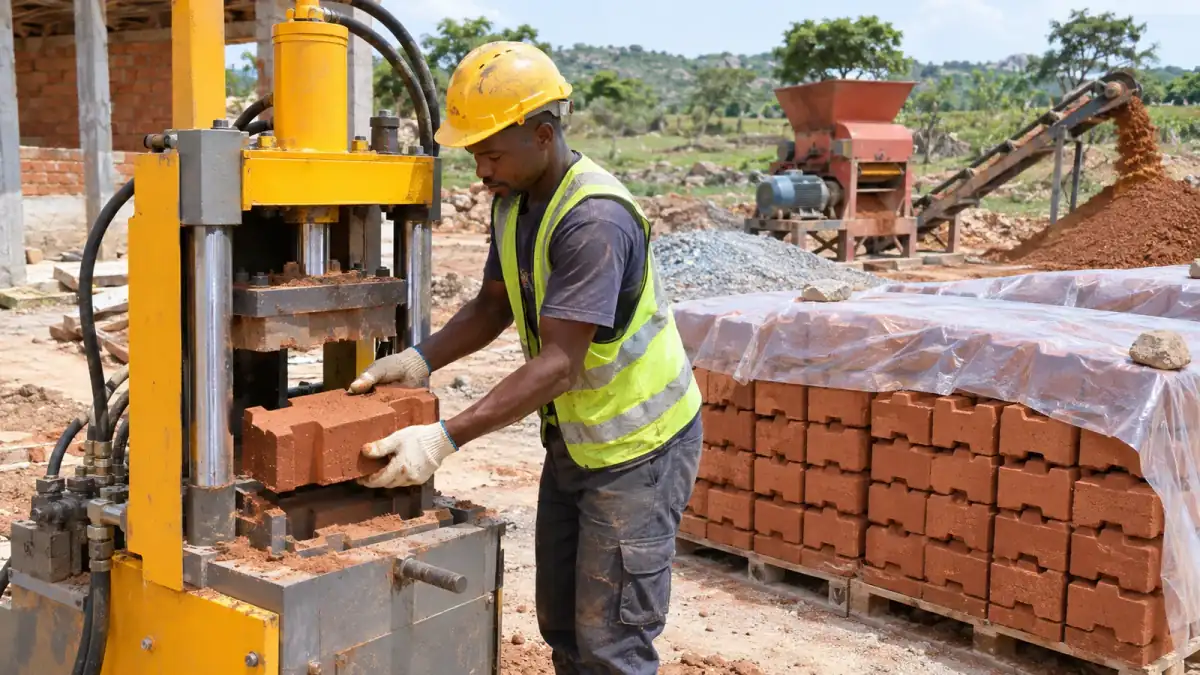
A compressed earth block machine — also called a CEB machine, earth block press or soil brick making machine — is the core of any earth building business. Here is how to choose one.
How a CEB machine works
- Soil is crushed, sieved and mixed with cement or lime and a little water.
- The mix fills the mould box; the press compacts it from below or above.
- The brick is ejected and stacked for curing (kept damp under cover).
Interlocking moulds form keys and holes so bricks lock together and accept vertical reinforcement and grout.
Machine types
| Type | Example | Power | Bricks per cycle | Best for |
|---|---|---|---|---|
| Manual | KDS2-40 | None | 2 | Remote and community projects |
| Diesel hydraulic | KDS2-25D | Diesel engine | 2 | Off-grid sites |
| Hydraulic, light | QTS2-10 | Electric | 2 | Small businesses |
| Hydraulic | KQ2-25 | Electric or diesel | 2 per 25 s | Commercial yards |
| Automatic | QTS5-10 | 7.5 kW electric | 5 per 10 s | Housing programmes |
| Complete line | Automatic clay brick line | Electric | — | Industrial CEB production |
Why pressure matters
Higher, consistent compaction gives denser bricks with better strength and water resistance — or lets you reach the target strength with less cement. Our hydraulic presses work at about 16 MPa forming pressure.
Soil preparation equipment
- Soil crusher (hammer type) to break clods.
- Vibrating or rotary sieve, about 5 mm mesh.
- Pan or forced mixer for even stabiliser distribution.
- Belt conveyor to feed automatic presses.
Brick formats
Common interlocking formats include 300×150×100 mm and 250×125×100 mm (Hydraform-style or Uganda/Kenya-style keys). Half bricks, channel bricks for ring beams and water-tank bricks are available as extra moulds. Send us the brick your market uses and we will match the mould.
Choosing the right CEB machine
- Daily target under ~1,000 bricks, no power: manual.
- 1,000–3,000 bricks/day off-grid: diesel hydraulic.
- Commercial yard with grid power: KQ2-25 or QTS2-10.
- Large housing programme: QTS5-10 or a complete line.
Machines for this application
- KDS2-40 Manual Interlocking Clay Brick Machine — Manual lever-press compressed earth block machine — no electricity required, perfect for remote community building.
- KDS2-25D Diesel Eco Interlocking Brick Machine — Compact 400 kg diesel-powered hydraulic brick machine with 16 MPa pressure — complete with crusher and sieve options.
- KQ2-25 Hydraulic Interlocking Clay Brick Machine — Hydraulic press for 2 interlocking bricks per 25-second cycle with 16 MPa pressure — diesel or electric power.
- QTS2-10 Hydraulic Interlocking Earth Block Machine — Light 280 kg hydraulic earth block machine for interlocking clay and soil-cement bricks with optional crusher and sieve.
- QTS5-10 Automatic Interlocking Clay Brick Machine — Automatic hydraulic compressed earth brick machine: 16 MPa forming pressure, 7.5 kW and a 10-second cycle.
- Automatic Interlocking Clay Brick Production Line — Complete compressed earth brick line with crusher, mixer, conveyor and automatic hydraulic press for commercial output.
Send a soil photo — we will recommend a CEB machine
Send your target daily output, product sizes, local raw materials and voltage. Our engineers reply within 24 hours with a recommended configuration, layout and itemised quotation.
Frequently asked questions
How many bricks can a CEB machine make per day?
From several hundred with a manual press to several thousand with hydraulic and automatic presses, depending on crew and soil supply.
What is the difference between a CEB machine and a concrete block machine?
A CEB machine presses soil at high pressure without vibration; a concrete block machine uses vibration and pressure on a cement-aggregate mix.
Do I need a soil crusher?
Usually yes. Crushed and sieved soil compacts more evenly and gives stronger bricks.
Related guides
- Compressed Earth Blocks (CEB): Soil, Strength and Earth Block House Construction
- Manual vs Hydraulic Brick and Block Press: Output, Strength and Cost Compared
- Interlocking Clay Bricks vs Concrete Blocks: Which Should You Produce?
- Interlocking Concrete Blocks: Types, Uses in Home Construction and How They Are Made